
Already sent money? Start here.

Wire safety · Buyers and sellers

Stop wire fraud with one phone call

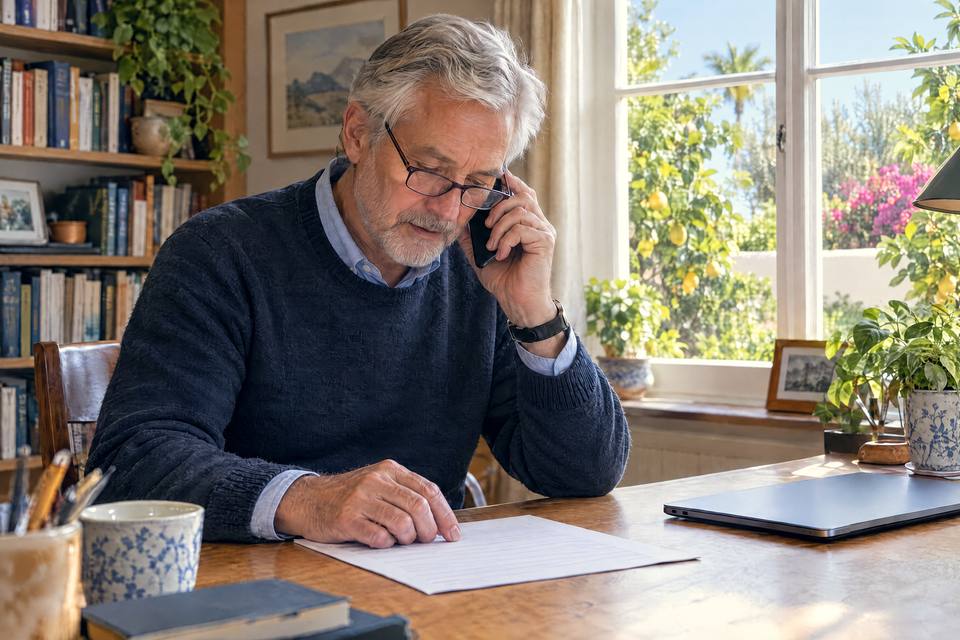
A man at a home desk talks on the phone and checks a number on a printed page.

Thieves send fake escrow emails that carry their own bank account, and the emails can look just like ours. Call us at (714) 544-6525 to check the instructions before you send money or share bank details. If money has already gone out, phone your bank at once, then file a report at ic3.gov.

Test yourself with four practice messages.

Two go to buyers, one goes to a seller, and one comes from our real email address. Decide whether each is real or fake, then see what gave it away.

Message 1 of 4

Email

From
Alliance Mutual Escrowclosing@ameescr0w.com (an invented example address)
Subject
Action needed today: updated wire instructions

Hello! Our bank account changed this morning. Please wire your down payment to our new account, shown in the attached PDF. It must go out before 2 p.m. today, or your closing may be delayed.

These messages are made up for practice. Our real website is alliancemutualescrow.com. Our email addresses end in @ameescrow.com.

How does wire fraud work in escrow?

The FBI’s name for it is business email compromise. In a home or business sale, it usually unfolds like this.

  1. Step 1: They find your deal

    A criminal breaks into someone’s email, or creates a look-alike address, and poses as someone in your sale. It could be an agent, an escrow or title officer, or one of the two parties.

  2. Step 2: Fake wiring instructions arrive

    The message looks normal, but the bank account belongs to the thief. There’s often a rush, meant to keep you from checking.

  3. Step 3: The money disappears fast

    As soon as the wire arrives, the thief moves the money again. Minutes matter after money goes to the wrong place.

Habits that keep your money safe

Every time money is involved

  • Look up our phone number on this website, not in an email or a text: (714) 544-6525. Add our number to your contacts.
  • Call us before you wire money or share your bank details with anyone.
  • Treat changed wiring instructions as a warning sign, even when they come from a familiar address. Hackers can take over real accounts.
  • Read the sender’s whole email address, especially on a phone. One swapped letter, or a zero in place of an “o,” is all it takes.
  • Don’t click a link or open an attachment you weren’t expecting.
  • Check your bank account for charges you don’t recognize.

Selling? Thieves want your sale money too

The seller’s version of this scam asks where your money should go. It arrives by text or email, with a link or form to collect your account number.

Never answer one with bank details, even if it seems to come from us. Call us at (714) 544-6525, and we’ll go over how your money reaches you.

Already sent money? Act now

Every minute counts. Go in this order.

  1. Step 1: Phone your bank first

    Ask the bank to pull back the wire (a recall) and to alert the bank on the receiving end. Call the moment you suspect fraud.

  2. Step 2: File a report with the FBI

    File a complaint at ic3.gov, whatever the amount, and include the bank details the form asks for. The FBI’s Recovery Asset Team tries to freeze stolen money by working with banks. Success isn’t guaranteed, so don’t wait.

  3. Step 3: Call us

    Call (714) 544-6525. We’re open weekdays from 8:30 a.m. to 5 p.m.. If we’re closed, don’t wait for us: your bank and the FBI report come first. Add our number to your contacts.

Free notices when something records on your home

In Orange County, owners get a free courtesy notice in the mail from the Clerk-Recorder whenever a document that affects their title is recorded. There’s no sign-up. If a notice surprises you, contact the Recorder.

In Los Angeles County, the Registrar-Recorder/County Clerk mails homeowners copies of recorded documents that change ownership, add a loan against the home, or give notice of a foreclosure. You can also sign up for email alerts. The county’s Homeowner Notification Program page explains how.

Questions about wire fraud

How do I know a message really came from you?

You can’t be sure from the message alone. Our email addresses end in @ameescrow.com, but a real address can still be hacked. Treat any wiring instructions as a reason to pick up the phone. Call (714) 544-6525, a number you got from this website, before you act.

What does “business email compromise” mean?

It’s the FBI’s term for a scam where a criminal takes over or imitates an email account, then uses it to get someone to send money. In a sale, the fake email usually asks you to send sale money, a deposit or a down payment to a new account.

I already wired the money. Can it be recovered?

Sometimes. Call your bank at once and ask for a recall of the wire, then file a report at ic3.gov. Working through the banks, the FBI’s Recovery Asset Team may be able to freeze the money. It can’t promise that, so act quickly.

Where do I report wire fraud?

Start with your bank. Next, the Internet Crime Complaint Center (IC3), run by the FBI, at ic3.gov. After that, call us at (714) 544-6525.

I’m selling. How will my sale money reach me?

Your signed escrow instructions say how, by wire or by check. Thieves write to sellers too, asking where the money should go. Never answer an email or a text with your bank details, even one that seems to come from us. Call us at (714) 544-6525 and we’ll explain how you’ll be paid.

Sources and fine print

  1. FBI Internet Crime Complaint Center: Business email compromise
  2. FBI: Business email compromise
  3. IC3 complaint form
  4. IC3 2025 Annual Report (the Recovery Asset Team)
  5. DFPI Escrow Bulletin, February 2025: social engineering scams
  6. Orange County Clerk-Recorder: property documents and courtesy notices
  7. Los Angeles County Registrar-Recorder/County Clerk: Homeowner Notification Program

Sources checked September 2026. Page updated . General information, not legal or tax advice.

Call (714) 544-6525Open escrow